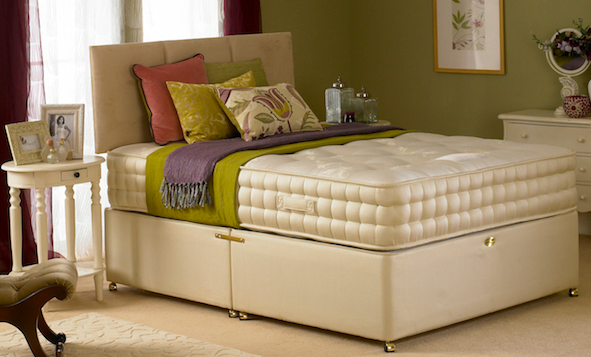
Mattresses
Open Coil Springs:
There are two types of open coil “Bonnell” springs that we use - 12.5 gauge (2.5mm thick wire springs) and 13.5 gauge (2.2mm thick). These are the gauges supplied by Agro - Europe's leading spring manufacturer. But BE CAREFUL as some bed companies use springs claiming to be 12.5, but use springs that are only 2.3mm thick. It is also important to know the number of springs within the spring unit of a bed.
Typically a double bed has 12x24 rows of springs. A King Size bed has 13x25 rows of springs. Agro – the company who supply our springs - use these numbers of springs as standard, but other companies may use less springs by making each spring wider in diameter – this makes them cheaper to make, but means they offer less support.
Pocket Springs:
Pocket spring mattresses (PSM) offer greater lumbar support as there are more springs than in a Bonnell unit. In a PSM the springs are individually housed in fabric pockets and move independently – this means the springs only compress where a person lies, thus allowing for motion separation between the sides of the bed. So even if your partner is ten stone heavier and an erratic sleeper, they won't disrupt your night's slumber.
Fillings:
There really is little variation in the fillings that go into modern mattresses – they are made up of insulator and comfort layers. Traditionally, insulator layers were made from coir (coconut) fibre, and cotton or wool/flock-type felts were used as comfort layers. But things have changed - these days most insulator layers are made up of thermally-bonded reclaimed felt, and polyester is predominantly used in comfort layers.
Some makers of expensive beds often describe polyester as “white fibres”, but don't be fooled, they mean polyester. This means there is, despite what the big brands tell you, little difference between their expensive mattresses and those made by the smaller, less well known manufacturers – apart from higher prices!
Memory Foam:
Memory foam products are used either as the primary component in a foam filled mattress or as a comfort layer in an open coil/pocket spring mattress. Memory foam works by reacting to body heat and becoming soft – it then moulds and re-moulds to your body’s contours as you move about in bed. The real selling point for memory foam in beds is that it helps you to maintain the correct posture and allows your spine to align horizontally when lying on your side.
Some people get too hot sleeping on memory foam in the hotter summer months. To combat this, we offer memory combinations with memory foam on one side of the mattress and a more traditional side with insulator and comfort layers which allow air to circulate through them. This will keep you comfortable all year round.
Covers:
Most of our mattresses are upholstered in high quality damask covers that are traditionally woven and don't stretch in any direction - giving them a firmer feeling. We also use two or four-way stretch knitted covers that provide a luxurious, softer feeling surface.